
SMB Supply Chain Resilience: Build It Before the Next Shock
SMB Supply Chain Resilience: Build It Before the Next Shock THE SHOCK ISN'T THE PROBLEM. YOUR REACTION TIME IS. A strait closes, a tariff gets announced on a Tuesday and pulled back on a Friday, and…
By Steve Sanford
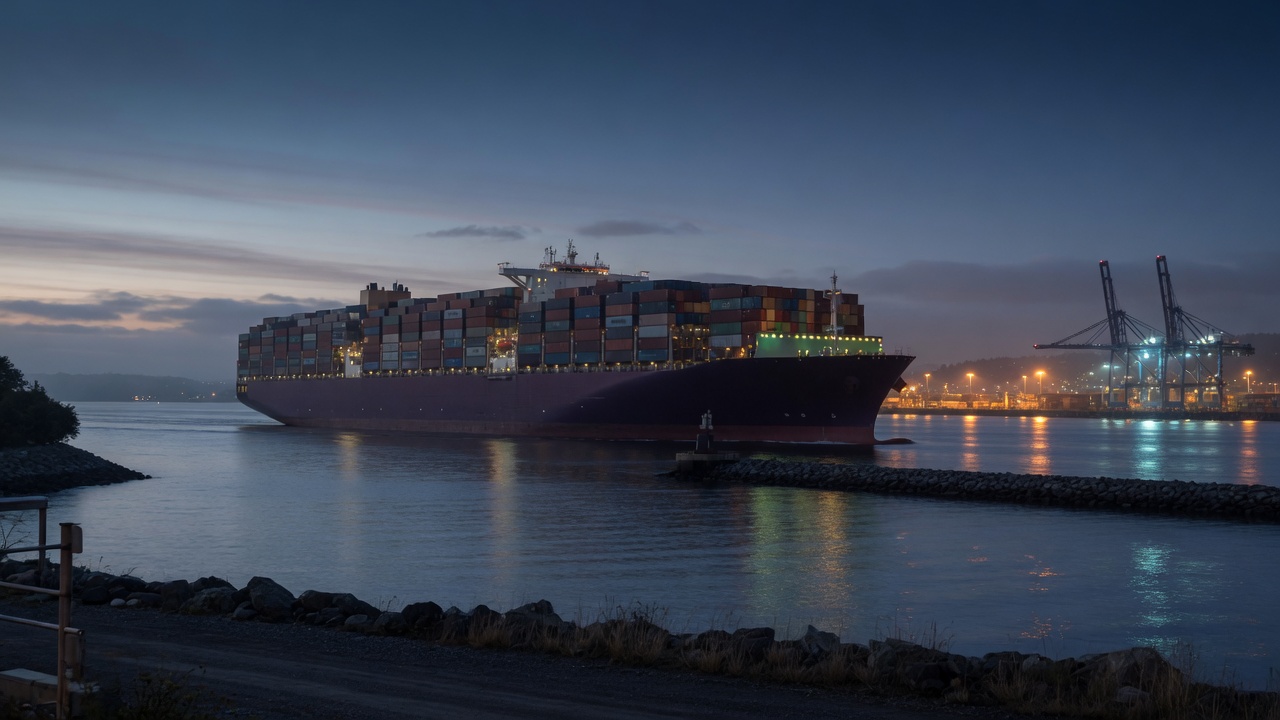
SMB Supply Chain Resilience: Build It Before the Next Shock
THE SHOCK ISN'T THE PROBLEM. YOUR REACTION TIME IS. A strait closes, a tariff gets announced on a Tuesday and pulled back on a Friday, and small business owners everywhere do the same thing: count stock and start calling suppliers cold, mid-crisis, with no plan in hand. That's not a strategy. That's panic wearing a business suit, and it's costing you margin every single time.
Supply Chain Resilience for Small Business Starts With Admitting the Runway Is Short
Most small businesses I talk to think they have more cushion than they actually do. They don't. Senior supply chain executives can see beyond their tier-one suppliers only 42% of the time [1], and if the big companies with dedicated risk teams are half blind past their first supplier, an SMB running one person deep on procurement is basically flying with the windows painted over.
Single-supplier relationships per SKU are the norm for small operators, not the exception, and there's usually no backup plan sitting on the shelf if that one source goes dark [1]. That's not a knock on anybody. Without a dedicated procurement team, single-sourcing is usually the only practical choice [1]. But "practical" and "safe" are two different words, and confusing them is how a shipping story on the news turns into a six-week scramble.
Global Pressure Doesn't Spike and Fade. It Sets Up Camp
Here's the part that surprises people: this isn't a one-time bad quarter. Small businesses worldwide are stuck in a widening "pressure gap," where costs keep climbing and payments keep slowing, driven by tariffs, inflation, geopolitical instability, and trade tension all leaning on the scale at once [2]. That's a global survey talking, not one grumpy owner in one industry.
For micro, small, and medium enterprises, which make up more than 90% of firms globally, uncertainty has stopped being a one-off disruption and become the actual operating environment for doing business [3]. Read that again. Not a bad stretch. The environment.
And the exposure isn't evenly spread. SMEs carry acute exposure to trade disruptions because of structural limits most of them can't engineer around fast: limited capital reserves to absorb stretched margin pressure, narrow supplier networks that make diversifying hard, and shrinking access to trade financing as lenders get nervous [4]. Rising input costs and supply chain disruption have already cut output for small manufacturers, pushed delivery timelines out, and squeezed working capital tighter than most owners are comfortable admitting out loud [4].
Inflation is still the number one worry for 46% of small businesses as of the latest available data [5]. Not tied for first. First.
Two Weeks Is the Number That Should Bother You
The average time it takes a business to plan and execute a response to a supply disruption is two weeks [1]. Two weeks of a supplier down, or a shipping route closed, before most companies even get their arms around what to do about it. That's the real cost of reactive purchasing. It's not just the higher unit price when you're scrambling to source last minute. It's fourteen days of decisions made under pressure instead of decisions made with a plan already sitting in a drawer.
Now here's the thing that should actually change how you think about this: companies that already knew which products were exposed and how long their stock would hold didn't need that two-week window [1]. They checked the impact and moved, same day, because the hard part, knowing your own numbers, was already done.
Think but pause. That's the whole game here. You can't stop a strait from closing or a tariff from landing on a Tuesday news cycle. What you control is whether you're starting your response from zero or starting from a plan you built during a calm month nobody was paying attention to.
The Fix Isn't Enterprise Infrastructure. It's Two Habits
Big companies handle this with dual-sourced supply chains and dedicated risk teams. You don't need that, and honestly, trying to build a mini version of enterprise procurement is how a lot of SMBs waste money chasing a solution sized for someone else's balance sheet. There's a smaller, cheaper version of this that actually works at your scale, and it comes down to two habits.
First: qualify a backup supplier for your most critical components before you need one [1]. Not after the shock. Before it. Getting a second source properly set up takes time. You need a trial order in, and you need to actually learn their lead times, not guess at them [1]. Do that work during a boring quarter and you're positioned to place a repeat order the moment your primary supplier goes down, instead of starting a supplier search cold while your production line sits idle.
Second: stop reordering on a calendar. Most SMBs reorder every 30 days or every quarter no matter how much they've actually used, and that's a habit built for convenience, not accuracy [1]. When a disruption hits, that fixed schedule either lets you run out before the next planned order or ties your cash up in inventory that isn't moving [1]. Switch to consumption-based reorder points instead: track real usage, not just sales, because scrap, rework, and parts used across multiple products all count against your actual stock position [1].
Where AI Actually Earns Its Keep Here
I'll say the thing a lot of consultants won't: none of this requires exotic software. Tracking average order volumes and supplier lead times doesn't need a dedicated analyst or a specialist platform [1]. But it does need to happen consistently, and consistency is exactly where most small operators fall down, because nobody's got a spare fifteen hours a week to babysit a spreadsheet.
This is a legitimate use case for AI-assisted forecasting and procurement tools, and I want to be specific about why. The job isn't glamorous. It's reading usage patterns, flagging when a SKU is drifting toward a reorder point, and surfacing which suppliers are creeping past their normal lead times. That's pattern-matching on your own historical data. It's exactly the kind of repetitive, number-heavy monitoring that AI does well and humans do badly, because humans get busy and stop checking.
Human prompted, human approved still applies. You set the goal (protect these ten SKUs, flag anything past a two-week lead time drift), and the tool does the watching. You still make the call on which supplier to onboard and when to pull the trigger on a backup order. That's the point: not replacing your judgment, just making sure the warning shows up on day one of a disruption instead of day nine, when you finally notice stock is low.
Why the Calm Period Is the Only Advantage You've Got
The strait crisis, the tariff whiplash, whatever the next headline turns out to be, it will eventually resolve. It always does. But the underlying condition, SMBs carrying concentrated supply risk with almost no planning infrastructure, doesn't resolve with it [1]. That's the part people miss. They wait for things to calm down and think the problem is solved. The problem was never the crisis. The problem is what you built, or didn't build, during the months before it.
Crisis resilience is almost entirely a function of decisions made during calm periods [1]. That's not a motivational poster line, that's the actual mechanism. The planning horizon you build before a crisis is the only one you get to use during it [1]. You don't get to go back and build backup supplier relationships mid-shock. You don't get to switch to consumption-based reordering while your shelves are already running dry. That work has a shelf life, and the shelf life is: do it now, or don't have it when you need it.
- Qualify one backup supplier for your single most critical component this quarter, even if it's just a trial order and a lead-time conversation.
- Pick your top five SKUs by revenue impact and switch those to consumption-based reorder points before switching everything.
- Set up one AI-assisted alert on lead-time drift so you're not relying on someone remembering to check.
Frequently Asked Questions
What is supply chain resilience for small businesses?
It's the ability to keep operating, or respond fast, when a supplier fails, a shipping route closes, or costs spike overnight. For SMBs it mostly comes down to two things: knowing your own exposure (which SKUs, which suppliers, how much lead time you actually have) and having a backup plan qualified before you need it.
How can a small business prepare for supply chain disruptions without enterprise-level resources?
Skip trying to replicate a big company's dual-sourcing program. Qualify one backup supplier for your most critical component, switch your top SKUs from calendar-based reordering to consumption-based reorder points, and track lead times consistently [1]. That's inexpensive and it doesn't require a specialist team.
Do supply chain costs from tariffs and trade disruption ever fully come back down?
Inconsistently, and not fast. Inflation has cooled from pandemic-era peaks but sits above target levels, meaning costs stay structurally elevated even after headline numbers ease. For many SMBs, uncertainty itself, not just price, has become a permanent planning condition rather than a temporary spike [3].
Can AI tools actually help with small business procurement and forecasting?
Yes, for the parts that are repetitive and data-heavy: tracking usage against reorder points, flagging supplier lead-time drift, surfacing which SKUs are at risk first. The decision on which supplier to onboard or when to place a backup order still needs a human. Human prompted, human approved.
If you're reading this because a shipping headline just gave you a scare, good, that's the right time to act, not the wrong one. Pick one SKU today. Find out how much of it you actually use in a month, not just what your calendar says to reorder. That's the whole starting move, and it's the same move I'd make if it were my own shop on the line.
Sources
- How SMBs Can Build Better Supply Chain Resilience (forbes.com)
- Global Survey Finds Small Businesses Trapped in Growing 'Pressure Gap' as Costs Rise and Payments Slow (markets.businessinsider.com)
- The Impact of Tariffs and Trade Policy Uncertainty on SME ... (jsbs.scholasticahq.com)
- Small business, big impact: How SMEs are adapting to the ... (apac.knightfrank.com)
- The Challenges and Opportunities Facing Small Businesses Right ... (uschamber.com)
Researched from 7 vetted sources · average source authority DR 86
#supplychainresilience #smbsupplychain #smallbusinessprocurement #supplychaindisruption #smallbusinesssupplychainstrategy #backupsupplierplanningforsmbs #howtoreducesupplychaindisruptionresponsetime #smbinventorymanagementduringtariffs #whatissupplychainresilienceforsmallbusiness #aiforecastingforsmallbusinessprocurement #tradedisruptionsmbimpact